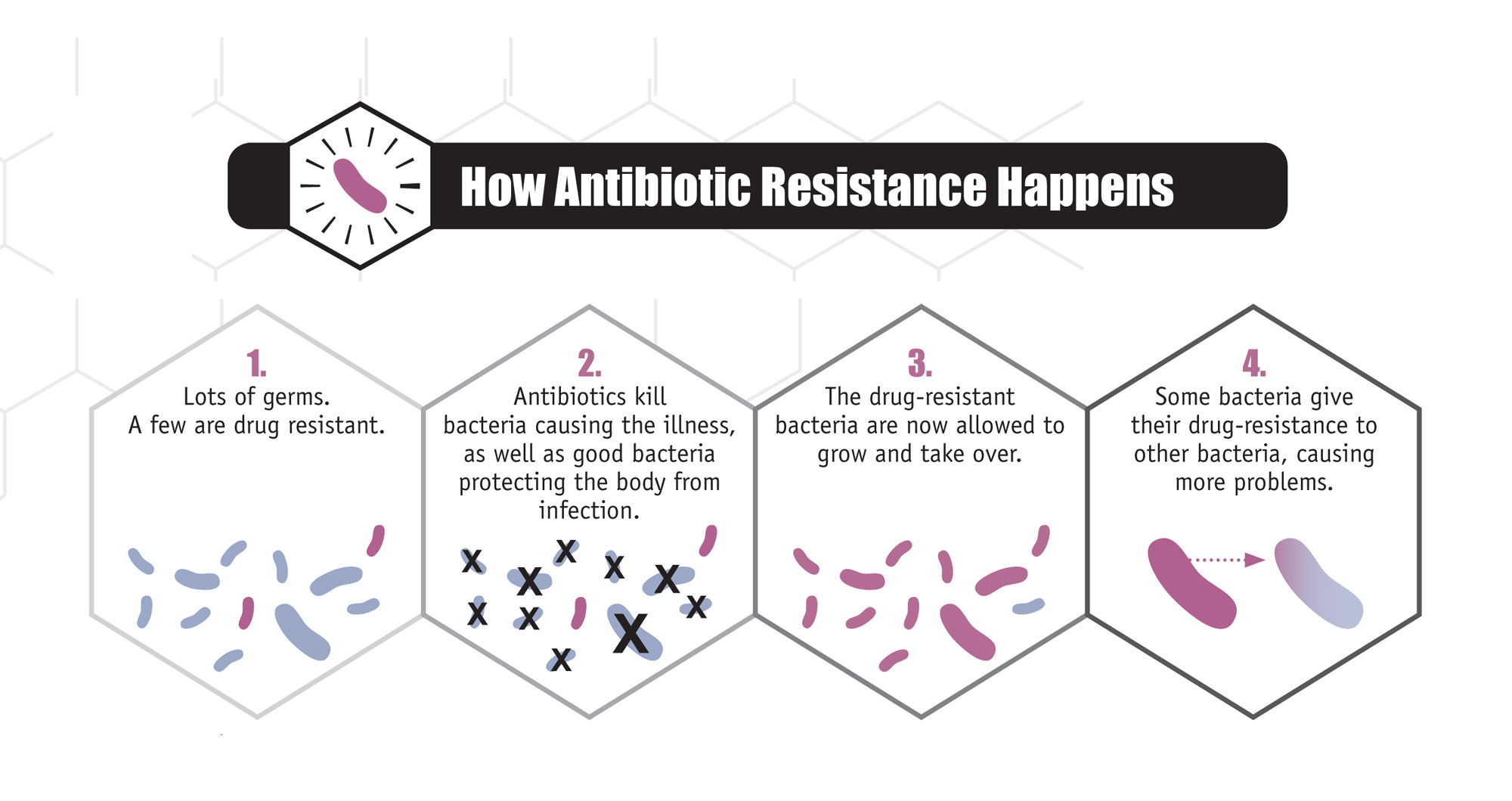
Bacteria become resistant by acquiring mutations that allow them to survive in the presence of antibiotics. Some mutations eliminate or modify the bacterial structure that the antibiotic attacks whereas other mutations enable the production of chemicals that inactivate antibiotics. Still others shut the gates that allow antibiotics into the cell, and others enable mechanisms that pump the antibiotic back outside, so it never reaches its target. Such mutations usually occur spontaneously but the use of certain classes of antibiotics, especially the ones causing DNA damage, can increase the mutation rate in bacteria.
Another important way by which bacteria can become resistant is through the exchange of genetic information. Bacteria have the ability to swap genes with each other and this is a route by which resistance genes are frequently traded between different types of bacteria. Whether by mutation or genetic exchange, individual bacteria can acquire multiple resistance genes and become resistant against several classes of antibiotics. They are then said to be multi-resistant.
 bacteriaresist